The iPhone turned 17 this year.
For most of its life, every serious tech company’s answer to “what’s next after the smartphone?” was another smartphone. A foldable one. A thinner one. One with a better camera. One with a different notch.
Then something shifted.
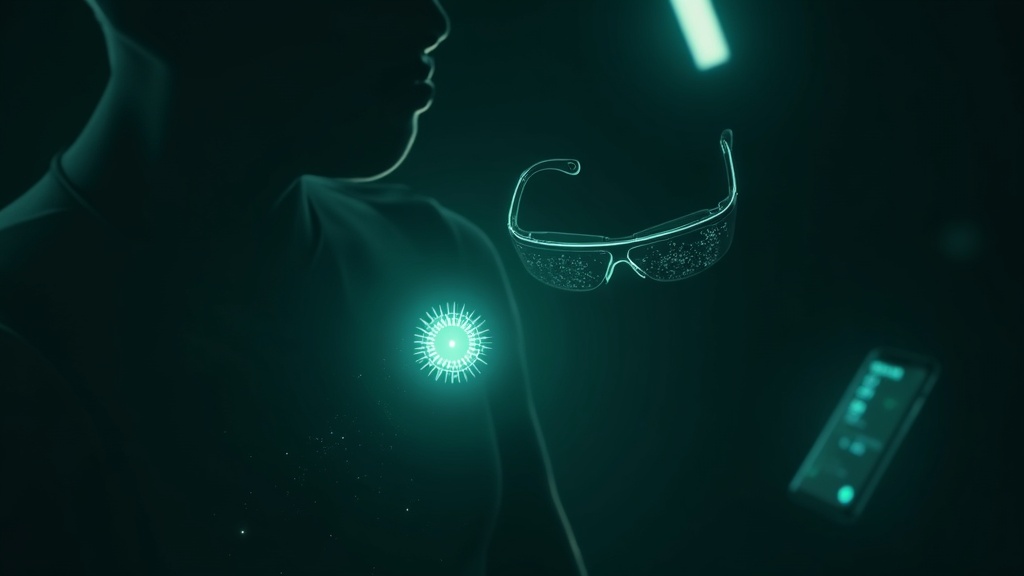
In the past 18 months, a new category of device has emerged — not phones, not watches, not laptops. Something genuinely different: AI-first hardware that argues the smartphone itself is the problem. That the screen is an addiction. That the interface of the future isn’t something you stare at, but something that lives alongside you, listening, seeing, and acting.
The Humane AI Pin. The Rabbit R1. Meta’s Ray-Ban AI glasses. Google’s Project Astra hardware. A dozen others in various states of release.
We’ve spent time with these devices. We’ve tracked the reviews, the failures, the genuine surprises, and the extraordinary promises. Here’s the honest answer to the question everyone is actually asking:
Should you throw away your iPhone?
Not yet. But you should understand why these devices exist — because the answer tells you something important about where we’re actually going.
Why Now? The Case Against the Smartphone
Before the hardware reviews, the argument deserves a fair hearing.
The smartphone is the most successful consumer technology in history. It put a computer in every pocket, connected billions of people, created entirely new industries, and restructured human attention in ways we’re still processing.
It also created a set of problems that the smartphone, by design, cannot solve.
The screen addiction problem. The average person unlocks their phone 96 times per day. The average American spends 4+ hours daily staring at a screen they carry in their pocket. The entire business model of the dominant smartphone apps is engineered to maximize time-on-screen, because attention equals revenue. The smartphone isn’t failing at its job — it’s succeeding at a job that happens to be harmful.
The context-switching problem. Every notification, every app, every message is an interruption that fragments attention. Cognitive science is consistent on this: task-switching has significant productivity and cognitive costs. The smartphone is an interruption machine by design.
The interface ceiling. Touch screens + apps + notifications is an interface paradigm from 2007. AI has capabilities that this paradigm fundamentally constrains. You can’t have a continuous, context-aware AI assistant through an app that you have to remember to open.
The AI gadget category is an argument that the smartphone interface is the ceiling, and the only way to go beyond it is to build something different.
That argument is right. The question is whether any current device delivers on it.
The Humane AI Pin: The Vision That Launched a Category
The Humane AI Pin was the most anticipated piece of consumer tech in years. The founders — former Apple executives — promised a post-smartphone future: a small square worn on your chest, projecting a laser display onto your palm, listening with always-on AI, connected to the cloud.
No screen. No apps. Just AI.
The reality, when it shipped, was more complicated.
What It Gets Right
The concept is genuinely compelling. Wearing AI rather than carrying it changes the interaction model fundamentally. The Pin responds to voice naturally, handles calls, translates in real time, identifies objects you’re looking at, and provides information without requiring you to reach for a device.
In its best moments, it delivers something the smartphone never could: AI presence without the screen tax. You stay present in conversations. You stay aware of your environment. The AI assists at the periphery instead of demanding to be at the center.
The translation feature in particular is remarkable in practice. Having real-time translation whispered in your ear during a conversation — without a phone between you and the other person — changes the social dynamic entirely.
What Needs Work
Battery life became the defining limitation. The Pin requires a charging case solution similar to AirPods, which undermines the always-on proposition. The laser projection display, while innovative, is only usable in limited lighting conditions. And the AI underneath, while capable, occasionally fails in ways that are more frustrating when there’s no screen to diagnose.
The price point at launch placed it in premium territory before it had earned that position.
Verdict: A landmark device that proved the concept and failed the execution. Humane shipped a generation 1.0 product at generation 3.0 prices. The category it created is real. This specific product needed more time.
The Rabbit R1: The Interface Experiment
The Rabbit R1 took a different approach. Instead of wearable, it’s pocketable — a small orange device with a camera, a scroll wheel, and a screen. The innovation wasn’t the hardware. It was the software philosophy: a Large Action Model (LAM) that doesn’t integrate with apps through APIs, but learns to use apps the way humans do — by watching and replicating the interface interactions.
The pitch: instead of connecting to 50 services with 50 API integrations, Rabbit trained an AI to operate Spotify, Uber, Amazon, and dozens of others by navigating their interfaces directly.
What It Gets Right
The concept solves a real problem. App integration fragmentation is a genuine barrier to AI assistants being useful. Most services don’t have APIs, or their APIs don’t expose the full functionality of the app. A model that can operate the app itself — the way an AI agent operating a browser can use any website — is architecturally more scalable.
For a certain category of tasks — playing music, ordering food, booking rides — the R1 delivers a genuinely frictionless experience. Speaking a request and having it executed is qualitatively different from opening an app, navigating, and tapping.
What Needs Work
The R1 arrived underpowered for what it promised. The LAM technology, while innovative in concept, was inconsistent in practice. Some tasks it handled beautifully. Others it fumbled in ways that were difficult to predict.
The larger issue: carrying a second device only works if that device does something your phone cannot. In the R1’s current state, most of what it does can be replicated by a phone with a capable AI assistant. The unique value proposition isn’t yet compelling enough to justify the additional device.
Verdict: The most intellectually interesting device in this category. The LAM approach is the right architecture for the long term. The current execution is a promising prototype, not a finished product.
Meta Ray-Ban AI Glasses: The Sleeper Hit
Here’s the one nobody expected to lead the category: Meta’s Ray-Ban smart glasses are, in 2026, the most genuinely useful AI wearable that exists.
They look like normal glasses. They have cameras on the front. They connect to your phone. And the integration with Meta AI — now powered by Llama 4 — has reached a level of capability that makes them practically useful for daily life in a way the Pin and R1 haven’t yet achieved.
What They Get Right
They don’t look like a tech device. This is more important than it sounds. Every previous attempt at smart glasses failed partly because wearing them made you look like you were cosplaying a sci-fi character. Ray-Ban AI glasses look like Ray-Bans. The social friction of wearing them in normal life is essentially zero.
The camera + AI combination is genuinely powerful. Point your glasses at a restaurant menu and ask for the best option given your dietary preferences. Look at a street sign in another language and get a translation. Identify a plant in a garden. Read text from a distance. These are tasks the AI handles seamlessly because it has eyes — your eyes, its perspective.
The audio quality and call handling are better than any earbuds-only solution, because the glasses frame positions speakers at the optimal angle relative to your ears.
Persistent context — because the glasses are worn continuously rather than picked up and put down, the AI builds context across your day in a way a phone-based assistant never can.
Where They Fall Short
The lack of a display is a real limitation for anything requiring visual output. You can hear answers but you can’t see them, which works for some tasks and fails for others. Battery life is respectable but not all-day for heavy use. And the camera raises legitimate privacy questions that Meta hasn’t fully resolved.
Verdict: The most polished and practically useful AI wearable on the market. Not a phone replacement — a genuine complement that earns its place.
The 2026 AI Gadget Comparison
| Device | Form Factor | Best Feature | Biggest Weakness | Replace Your Phone? |
|---|---|---|---|---|
| Humane AI Pin | Chest wearable | Screenless AI presence | Battery, laser display limits | No |
| Rabbit R1 | Pocket device | LAM app control | Inconsistent execution | No |
| Meta Ray-Ban AI | Glasses | Natural daily wear + AI vision | No display | Partially |
| Apple Vision Pro | Headset | Spatial computing quality | Price, social friction | No |
| Google Astra hardware | TBD | Deep Google integration | Early access only | Too early |
Why None of Them Can Replace Your Smartphone Yet
The honest answer, after all the reviews and hype: no current AI gadget can replace your smartphone, but several of them can meaningfully extend what your smartphone does.
The smartphone replacement requires a device that handles everything the smartphone does — plus something the smartphone cannot. No current product achieves this. Each one solves a specific problem while creating new constraints.
What they can do is shift how you use your phone. The Ray-Ban glasses reduce the number of times you pull your phone out. The Rabbit R1, when it works, makes certain tasks faster. The Humane Pin keeps you present in ways a phone never allows.
These are complements, not replacements. And complements with potential to become much more.
What the Next Generation Needs to Deliver
The first generation of AI gadgets was about proving the concept. The second generation — shipping in 2026 and 2027 — needs to deliver on five specific requirements to genuinely challenge the smartphone:
1. All-day battery without compromise. The always-on AI proposition collapses without it.
2. A display solution that doesn’t require holding up a hand. Whether that’s projection, transparent AR displays, or something not yet invented — the interface ceiling of audio-only is real.
3. App integration that actually works. Not demo-quality LAM that handles 20 services. Production-quality AI that handles the apps you actually use, reliably.
4. A killer use case that the smartphone cannot do. Not “does most things the phone does, but differently.” Something the phone structurally cannot provide.
5. A price that reflects where the product actually is. The premium pricing of first-generation AI gadgets relative to their capability was the category’s biggest trust problem.
🛡️ The AuraLink Security Perspective: The New Attack Surface Nobody Is Talking About
Every new category of connected hardware creates a new category of vulnerability. AI wearables are no exception — and in some ways, they introduce risks that are qualitatively new.
Always-on microphones and cameras. The AI gadget value proposition requires persistent audio and visual access. This is also the definition of a surveillance device if compromised. A Humane Pin or Meta glasses with a hijacked firmware update becomes a bug in your home, your office, and every private conversation you have.
Cloud-dependent processing. Most AI gadgets process on cloud infrastructure, not locally. Every query, every image you look at, every conversation captured goes through a third-party server. The privacy implications are significant and underexplored in most reviews.
Physical form factor vulnerabilities. A device worn on the body is subject to physical access attacks — someone borrowing your glasses gets access to your AI assistant’s memory and context. The threat model for wearables is different from devices kept in your pocket.
Identity verification bypass. Several AI gadgets use voice as the primary authentication signal. As we covered in our deepfake detection post, voice cloning requires three seconds of audio. A device that authenticates via voice and then executes financial transactions is a serious target.
Our recommendations for anyone using AI wearables:
- Enable end-to-end encryption for any AI assistant storage where available
- Review data retention settings — most default to storing interaction history indefinitely
- Treat these devices as you would any IoT device on your network: isolated where possible, updated immediately when patches release
- Never enable financial transaction capabilities on a voice-authenticated device without a secondary verification layer
The AI gadget revolution is real. The security infrastructure for it is not yet there.
The Verdict
The smartphone era isn’t ending in 2026. It’s beginning to fracture.
The iPhone will still be in billions of pockets this time next year. But the assumption that the smartphone is the only paradigm — that screens and apps and notifications are the permanent interface of human-computer interaction — that assumption is breaking.
The devices that break it won’t be the ones that ship today. They’ll be the second and third generations, built on what the current products prove and what they fail to deliver.
The Humane Pin proved AI-first hardware is physically feasible. The Rabbit R1 proved the LAM architecture is the right long-term approach. The Meta Ray-Ban glasses proved that wearable AI can be socially acceptable and genuinely useful.
The question isn’t whether this category succeeds. It’s which company figures out the last two or three problems first.
Put your iPhone back in your pocket — for now. But don’t get too comfortable with it.
New devices mean new attack surfaces. Know what you’re connecting to before you connect it.
AuraLink monitors emerging hardware vulnerabilities and helps organizations establish security policies for new device categories before they become problems.
Questions about securing AI wearables in your organization?
AuraLink AI Security — because the next attack surface is already on someone’s face.
More Articles



AuraLink AI Security
Is Your Business Protected?
Run a free AI-powered security scan — instant results, no credit card required.