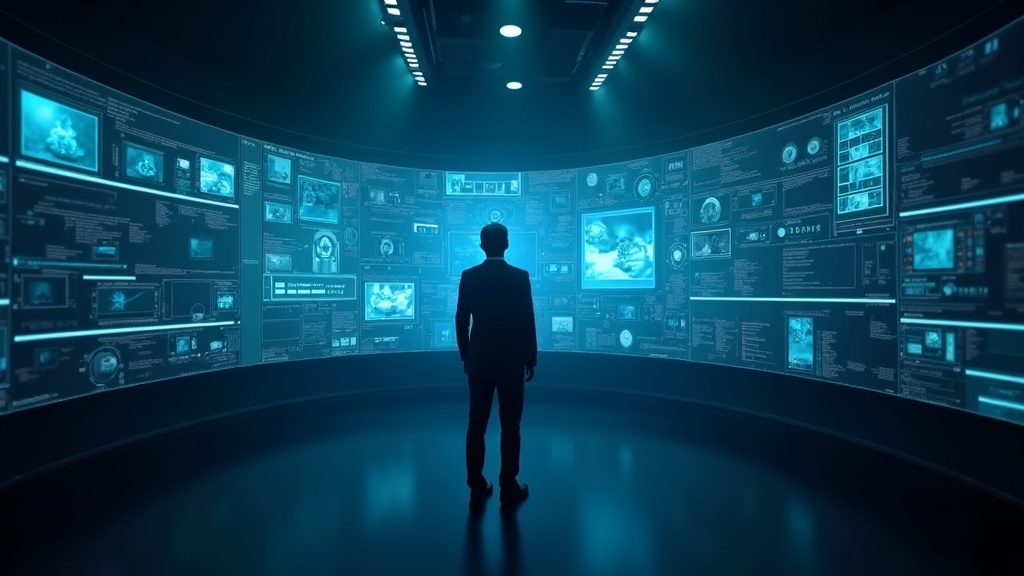
You don’t need a camera. You don’t need a crew. You don’t even need to leave your chair.
In 2026, the most compelling videos on social media, in marketing campaigns, and across streaming platforms are increasingly being made by one person with a text prompt and a browser tab. AI video generation went from “impressive demo” to “production-ready tool” faster than anyone in Hollywood expected.
The shift is real, it’s accelerating, and if you haven’t built it into your content workflow yet, you’re already behind.
At AuraLink, we test the tools that are reshaping the threat landscape — and the opportunity landscape. AI video is both. Here’s everything you need to know to go from zero to cinematic in 2026, and the one critical thing most guides won’t tell you about it.
Why AI Video Changed Everything in 2026
Video is the dominant format on every major platform. YouTube, TikTok, Instagram Reels, LinkedIn — the algorithm rewards video universally, and human attention follows the algorithm.
The problem has always been production cost. Good video required cameras, lighting, editing software, actors, and time. An average 60-second brand video cost thousands of dollars and days of production. Most small businesses and individual creators couldn’t compete with larger players who had production budgets.
AI video generation broke that equation completely.
What changed:
- Text-to-video models can now generate photorealistic footage from a written description in minutes
- Image-to-video tools animate still images with natural, physics-aware motion
- Video-to-video transformation lets you restyle existing footage into any visual aesthetic
- Lip-sync and voice cloning create spokesperson videos from a single photo and a script
- Consistent character generation maintains the same AI “actor” across multiple scenes
The result: a solo creator with a $50/month subscription can produce content that would have required a $50,000 production budget in 2020.
This is the opportunity. There’s also a threat — we’ll get to that.
Sora: OpenAI’s Cinematic Powerhouse
OpenAI’s Sora arrived with massive expectations after its initial demos showed things nobody believed a model could generate: realistic crowd scenes, complex physics, multi-shot continuity. The full commercial release has delivered on most of that promise.
What Sora Does Best
Photorealism and physics. Sora’s understanding of how light, shadow, water, cloth, and human movement behave is unmatched in the current market. When you prompt it for a rain-soaked city street at night, it doesn’t just look real — it feels real. The reflections on the pavement, the way a jacket gets wet, the rhythm of pedestrians moving — all of it lands with a level of physical coherence that other models still struggle with.
Cinematic camera language. You can prompt Sora with actual filmmaking vocabulary — slow dolly push, overhead drone shot, rack focus from foreground to background — and it understands what you mean. This makes it exceptional for content creators with film literacy who want precise control over visual storytelling.
Long-form coherence. Sora generates clips up to 60 seconds with maintained continuity. Characters don’t morph mid-scene. The lighting stays consistent. The background doesn’t randomly change. For short-form video content, 60 seconds is often all you need.
Where Sora Falls Short
Text rendering inside video frames is still unreliable — signs, screens, and written text in Sora videos often garble into plausible-looking nonsense. For content that requires legible text on screen, you’ll need to composite it in post.
Pricing positions Sora as a professional tool, not a hobbyist one. Access tiers are bundled with ChatGPT Pro, which puts it out of reach for casual users who want to experiment cheaply.
AuraLink assessment: Sora is the best tool for photorealistic, cinematically composed video. If your content needs to look like it was shot by a professional crew, this is your model.
Kling AI: The Speed Champion
Kling, developed by Kuaishou Technology, emerged as the surprise competitor nobody from the Western tech press expected. In 2026, it’s not a surprise anymore — it’s the tool that serious content creators reach for when they need quality fast without Sora’s price tag.
What Kling Does Best
Speed-to-quality ratio. Kling generates a 5-second clip in roughly 2 minutes on its standard tier, and the quality is genuinely impressive. For social media content where you’re iterating through multiple concepts quickly, this throughput advantage matters enormously.
Character and face consistency. Kling has invested heavily in maintaining consistent facial features across generations, which is critical for brand characters, recurring hosts, or any content that needs the same “face” to appear in multiple videos. This is an area where Sora still struggles.
Motion quality on human subjects. Kling’s motion synthesis for people — walking, talking, gesturing — is exceptionally natural. The “uncanny valley” problem that plagued early AI video is largely absent here for human subjects.
Image-to-video precision. Upload a still image and describe the motion you want: the camera orbit, the subject’s movement, the environmental animation. Kling translates these instructions into motion with better fidelity than most competitors. For product videos, portrait animations, and brand content built from static assets, this is the killer feature.
Where Kling Falls Short
Complex environmental scenes — crowds, detailed landscapes, intricate backgrounds — are where Kling shows its limitations compared to Sora. It excels at focused subjects but can struggle with environmental complexity.
The interface and documentation have improved significantly but still lag behind Western tools in terms of polish and English-language support resources.
AuraLink assessment: Kling is the workhorse of AI video in 2026. Best speed-to-quality ratio on the market. If you’re producing at volume, this is your primary tool.
Runway ML: The Creator’s Studio
Runway has been in the AI video space longer than anyone else, and it shows. Where Sora and Kling are primarily generation engines, Runway is a complete production environment — generation, editing, compositing, and transformation all in one platform.
What Runway Does Best
End-to-end workflow. Runway isn’t just about generating video from a prompt. It’s about everything that happens to video after it’s generated. Remove backgrounds. Change the color grade. Apply a visual style from a reference image. Extend a clip. Clean up artifacts. Runway handles the full pipeline.
Gen-3 Alpha Turbo (their current flagship model) strikes an excellent balance between generation speed and quality. It’s not the photorealistic ceiling that Sora reaches, but it’s fast, consistent, and produces results that look polished out of the box.
Style transfer and video-to-video. Upload existing footage and tell Runway to make it look like a Studio Ghibli film, a 1970s Super 8 home movie, or a futuristic cyberpunk cityscape. The style transfer quality is the best in the market. For brands that want a distinctive visual identity across all their video content, this is a game-changing capability.
Act-One. Runway’s motion capture system lets you drive AI character animation with real human performance — webcam footage of your own face and body becomes the animation input. The result is AI characters that move with genuine human expressiveness.
Where Runway Falls Short
Runway’s generation model isn’t the most photorealistic option. If pure realism is the goal, Sora wins. Runway’s strength is versatility and workflow, not raw output quality.
The platform has a learning curve. It’s genuinely powerful, but unlocking that power requires time invested in understanding what it can do.
AuraLink assessment: Runway is the choice for creators who want a complete production environment, not just a generation engine. Best for brands building a consistent visual identity.
The 2026 AI Video Tool Matrix
| Capability | Sora | Kling AI | Runway ML |
|---|---|---|---|
| Photorealism | ⭐ ⭐ ⭐ ⭐ ⭐ | ⭐ ⭐ ⭐ ⭐ | ⭐ ⭐ ⭐ |
| Generation speed | ⭐ ⭐ ⭐ | ⭐ ⭐ ⭐ ⭐ ⭐ | ⭐ ⭐ ⭐ ⭐ |
| Character consistency | ⭐ ⭐ ⭐ | ⭐ ⭐ ⭐ ⭐ ⭐ | ⭐ ⭐ ⭐ ⭐ |
| Camera control | ⭐ ⭐ ⭐ ⭐ ⭐ | ⭐ ⭐ ⭐ ⭐ | ⭐ ⭐ ⭐ |
| Style transfer | ⭐ ⭐ | ⭐ ⭐ ⭐ | ⭐ ⭐ ⭐ ⭐ ⭐ |
| Image-to-video | ⭐ ⭐ ⭐ ⭐ | ⭐ ⭐ ⭐ ⭐ ⭐ | ⭐ ⭐ ⭐ ⭐ |
| Editing tools | ⭐ ⭐ | ⭐ ⭐ | ⭐ ⭐ ⭐ ⭐ ⭐ |
| Price (entry tier) | High | Low–Medium | Medium |
| Best for | Cinematic realism | Volume production | Full workflow |
From Idea to Video in 5 Minutes: The Real Workflow
Here’s how an experienced creator moves from concept to finished clip in 2026. This isn’t theoretical — it’s the actual workflow used by content teams producing at scale.
Minute 0–1: Write the prompt.
Be specific. “A woman walking down a rainy street at night” produces generic results. “Slow tracking shot following a woman in a red coat walking along a wet cobblestone street in Tokyo, neon reflections on the pavement, cinematic color grade, shallow depth of field” produces exactly what you visualized.
Good prompting is a skill. The investment in learning it pays back immediately.
Minute 1–3: Generate and iterate.
Run 2–3 variations simultaneously. Platforms charge per generation, but the cost of 3 attempts is usually worth the quality improvement over locking in on the first result. Look for: correct motion direction, consistent lighting, no morphing artifacts.
Minute 3–4: Select and refine.
Pick the best generation. If it’s close but not perfect, use Runway’s editing tools to clean artifacts, adjust color grade, or extend the clip length. If it needs a style adjustment, apply a filter or run video-to-video transformation.
Minute 4–5: Export and caption.
Export at the platform-appropriate resolution. Add captions in your editing tool of choice — captioned video dramatically outperforms uncaptioned on every platform. Done.
Five minutes. No camera. No crew.
🛡️ The AuraLink Security Perspective: The Threat You’re Not Thinking About
Every guide to AI video generation will tell you about the opportunity. We’re going to tell you about what the same technology enables when it’s pointed in the wrong direction.
Deepfakes are no longer a specialized capability. The same tools that let you create a cinematic brand video in 5 minutes can generate a convincing video of your CEO authorizing a transaction, your employee badge photo animated and voiced, or a fake news segment featuring a real public figure.
In 2026, we are actively tracking:
- Business Email Compromise via deepfake video — attackers create short video clips of executives to validate fraudulent wire transfer requests over video calls
- AI-generated identity fraud — fake employee onboarding with fully AI-generated identity documents, photos, and video verification
- Reputation attacks — fabricated videos of executives or public figures placed in online spaces to manipulate stock prices, public opinion, or client relationships
- Social engineering at scale — personalized video messages that reference real details about the target, generated in bulk
What this means for your organization:
The existence of photorealistic AI video makes visual verification unreliable as a trust signal. Seeing is no longer believing. Any business process that relies on video confirmation — executive approvals, identity verification, customer authentication — needs a second verification layer that AI can’t spoof.
Practical defenses:
- Establish verbal code words for high-stakes authorization requests that must be confirmed in real-time conversations, not recordings
- Implement liveness detection in any video-based identity verification process — static checks are no longer sufficient
- Train your team to recognize the current tells: unnatural blinking patterns, lighting inconsistencies at hair edges, audio-video sync drift on consonants
- Verify through a separate channel any video-based request that involves money movement, credential access, or sensitive data
The same week a new AI video tool lowers the bar for creative content, it lowers the bar for social engineering attacks. These are the same technology.
Which Tool Is Right for You?
Choose Sora if: you need the highest possible photorealism for commercial content, product launches, or brand films where quality is the primary metric.
Choose Kling if: you’re producing at volume — social media content, multiple variations per week, rapid iteration cycles. Best cost-efficiency in the market.
Choose Runway if: you want a complete production environment, not just a generator. Style-consistent brand content, transformation of existing assets, or end-to-end video production without switching platforms.
Use all three if you’re building a professional content operation. Each has a role: Kling for volume, Sora for hero content, Runway for finishing and brand consistency.
The Bottom Line
AI video generation in 2026 is not a future technology. It’s a present one — deployed right now by the creators, brands, and unfortunately the threat actors who moved early.
The barrier to cinematic video content is gone. What remains is the skill to direct it: to write prompts that produce what you visualize, to understand which tool fits which job, and to build it into a workflow that scales.
That’s a learnable skill. And the window for competitive advantage is still open — but not for much longer.
The same AI that creates deepfake threats can detect them.
AuraLink monitors for AI-generated content targeting your brand, executives, and organization — and responds before the damage is done.
Want to understand how deepfake threats specifically apply to your business?
AuraLink AI Security — because the tools that create the content also create the threats, and you need to understand both.
More Articles
Beyond the Script: Why Emotional Intelligence Is the Next Frontier for AI Agents

Goodbye Notion and Trello: Why AI Agents Are the Future of Productivity in 2026
The End of the Smartphone Era? We Tested the AI Gadgets That Want You to Ditch Your iPhone
AuraLink AI Security
Is Your Business Protected?
Run a free AI-powered security scan — instant results, no credit card required.